Lexington, Kentucky · 1775 to now
The History of Lexington
Lexington began in 1775 as a frontier campsite named for a battle its founders had only just heard about. Hemp and thoroughbred horses built the town's early wealth, Transylvania University earned it the nickname "Athens of the West," and a 1958 planning decision protected the horse farms that still ring the city today. What follows is the whole arc — the eras, the people, the buildings that survived, and the film that proves it.
Lexington quick facts
- Founded
- 1775
- Frontier surveyors camped along the Middle Fork of Elkhorn Creek and named the site after the Battle of Lexington, fought that same year in Massachusetts.
- Chartered
- 1782
- The Virginia General Assembly chartered the town of Lexington while Kentucky was still Fincastle County, Virginia.
- What the name means
- Battle of Lexington
- Long hunters camped on the site got word of the opening battle of the Revolutionary War and named their new station in its honor.
- Merged government
- 1974
- Lexington and Fayette County merged into the Lexington-Fayette Urban County Government, one of the first city-county mergers in the U.S.
- Nickname
- Athens of the West
- Earned in the early 1800s for Transylvania University, its printing presses, and a cultural life rare on the frontier.
- Population today
- 322,570
- 2020 census — the second-largest city in Kentucky and seat of Fayette County.
Timeline
8 eras that made Lexington
Chronological, from Shawnee hunting ground to the merged city-county government. Each era is the moment something structural changed — the land, the economy, the boundary, the institutions.
- Before 1775Era 1 of 8
Shawnee hunting ground along the Bluegrass
Long before any survey stake went in, the rolling limestone country that became Fayette County was hunting territory used by the Shawnee, Cherokee, and other nations, though no permanent Native town stood on the exact site. The thick bluegrass and cane meadows supported enormous herds of bison and elk, and the trails they wore became the traces early settlers followed. The limestone bedrock beneath the region — the same geology that produces the area's famously mineral-rich water and grass — is the reason horse breeding and bourbon distilling both took root here a century later.
- Shawnee and Cherokee hunting ground
- Buffalo traces became settler roads
- Limestone-rich Bluegrass soil
- 1775–1782Era 2 of 8
A station named for a battle
In June 1775, a party of long hunters led by William McConnell camped beside the Middle Fork of Elkhorn Creek and learned that Massachusetts militiamen had clashed with British troops at Lexington that April. They named their campsite Lexington on the spot. Robert Patterson built a blockhouse there in 1779, and the Virginia legislature — Kentucky was still part of Virginia — formally chartered the town in 1782. The frontier station quickly became a supply point for settlers pushing into the Bluegrass.
- Named for Lexington, Massachusetts, 1775
- Patterson's fort, 1779
- Chartered by Virginia, 1782
- 1780s–1820sEra 3 of 8
Transylvania University and the Athens of the West
Transylvania Seminary, chartered in 1780, was the first institution of higher education west of the Allegheny Mountains, and by the early 1800s it had grown into Transylvania University with respected law and medical departments. Lexington's printing presses, silversmiths, and merchants gave the young town an outsized cultural reputation, earning it the nickname 'Athens of the West.' Henry Clay, the statesman and 'Great Compromiser,' built his estate, Ashland, on the edge of town and made Lexington his political base for decades. Mary Todd, who later married Abraham Lincoln, grew up in a house on West Main Street.
- Transylvania University, 1780
- Athens of the West nickname
- Henry Clay's Ashland estate
- Mary Todd Lincoln's girlhood home
- 1790s–1860sEra 4 of 8
Hemp, horses, and the Cheapside slave market
The Bluegrass economy that made Lexington one of the wealthiest towns in the early West was built on hemp cultivation, tobacco, and increasingly, the breeding of fine horses on the limestone pastures outside the city — practices sustained by enslaved labor on a scale unusual for a border-state city. Cheapside, the public square beside the courthouse, operated as one of the largest slave markets in the Upper South until the Civil War. After emancipation, formerly enslaved Lexingtonians built the East End neighborhood into a thriving Black community with its own churches, schools, and businesses, whose descendants remain central to Lexington's civic life today.
- Hemp and thoroughbred economy
- Cheapside slave market
- East End community founded
- 1865–1929Era 5 of 8
Rebuilding, racing, and the rise of the horse industry
After the Civil War, Lexington's economy pivoted harder toward the thoroughbred industry, and the Bluegrass horse farms that ring the city today — many still working farms rather than museum pieces — trace their pedigrees to this period. The Kentucky Association racetrack operated downtown through the early 1900s, and Keeneland Race Course opened in 1936 just outside the city as a nonprofit successor built by local horsemen. Tobacco warehouses and the University of Kentucky, chartered in 1865 as the state's land-grant college, anchored the local economy alongside the horse farms.
- Postwar thoroughbred boom
- University of Kentucky chartered, 1865
- Keeneland opens, 1936
- 1930s–1950sEra 6 of 8
Rupp, basketball, and a city sport takes hold
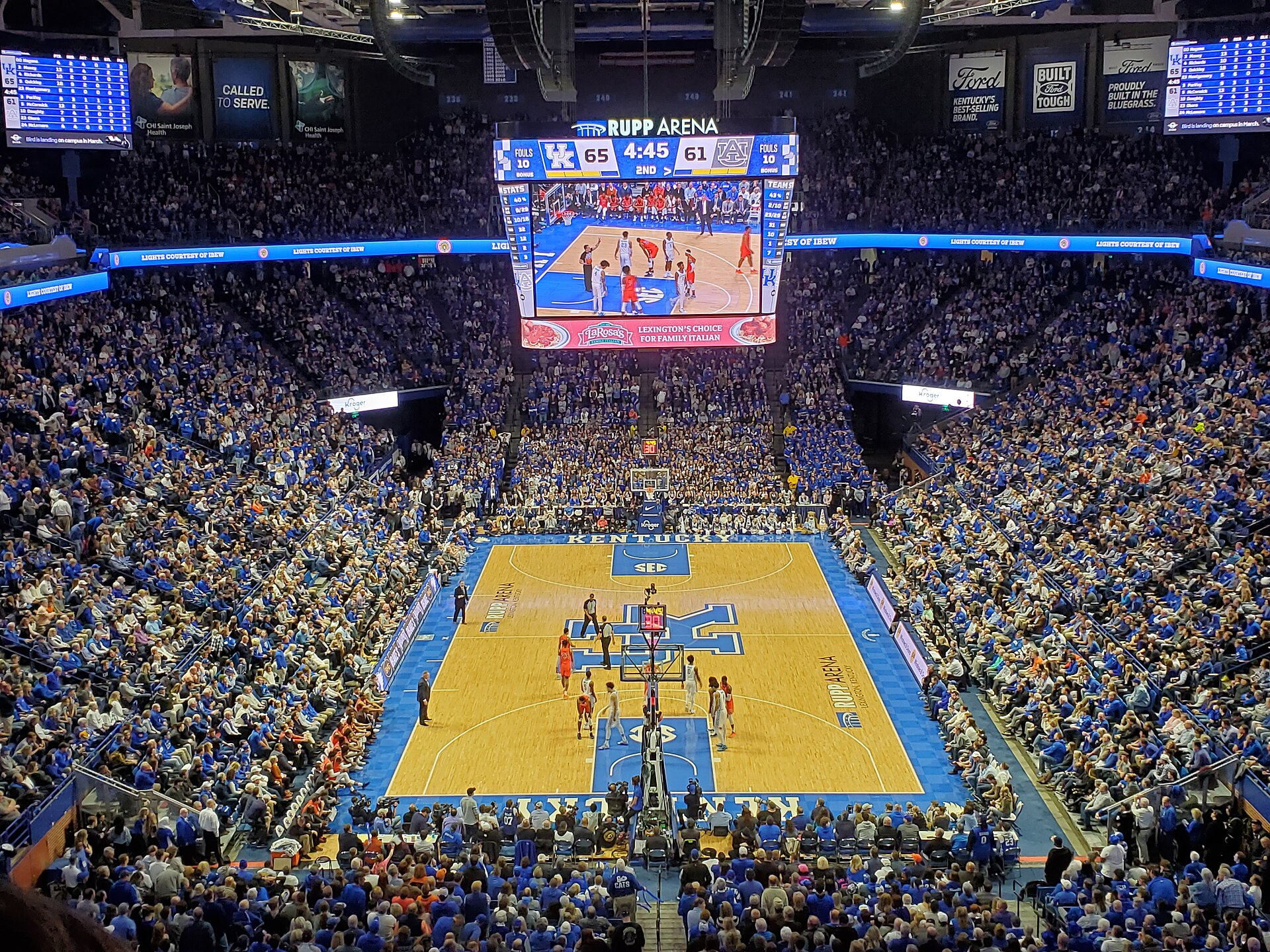
Adolph Rupp took over the University of Kentucky men's basketball program in 1930 and built it into a national powerhouse over four decades, winning the school's first NCAA championships and turning basketball into something close to a civic religion in Lexington. The Wildcats' success gave the city a second identity beyond horses and bourbon, one that still fills Rupp Arena downtown every winter. The mid-20th century also brought UK's expansion into a major research university and the beginnings of Lexington's shift from a market town into a regional hub.
- Adolph Rupp era begins, 1930
- UK basketball national titles
- UK becomes major research university
- 1950s–1980sEra 7 of 8
IBM, urban sprawl, and the boundary that saved the farms
IBM opened a major manufacturing plant in Lexington in 1956 (later spun off as Lexmark in 1991), and Toyota's massive assembly plant in neighboring Georgetown, which opened in 1988, reshaped the regional economy around manufacturing and logistics. As suburban growth threatened to swallow the horse farms the same way postwar sprawl consumed farmland elsewhere, Lexington adopted one of the nation's first urban service boundaries in 1958, deliberately limiting utility and sewer extensions to contain development and protect the surrounding horse country — a planning tool still credited with keeping the Bluegrass farms intact today.
- IBM plant opens, 1956
- Urban service boundary, 1958
- Toyota Georgetown plant, 1988
- Lexmark spinoff, 1991
- 1974–todayEra 8 of 8
Merged government and a modern downtown
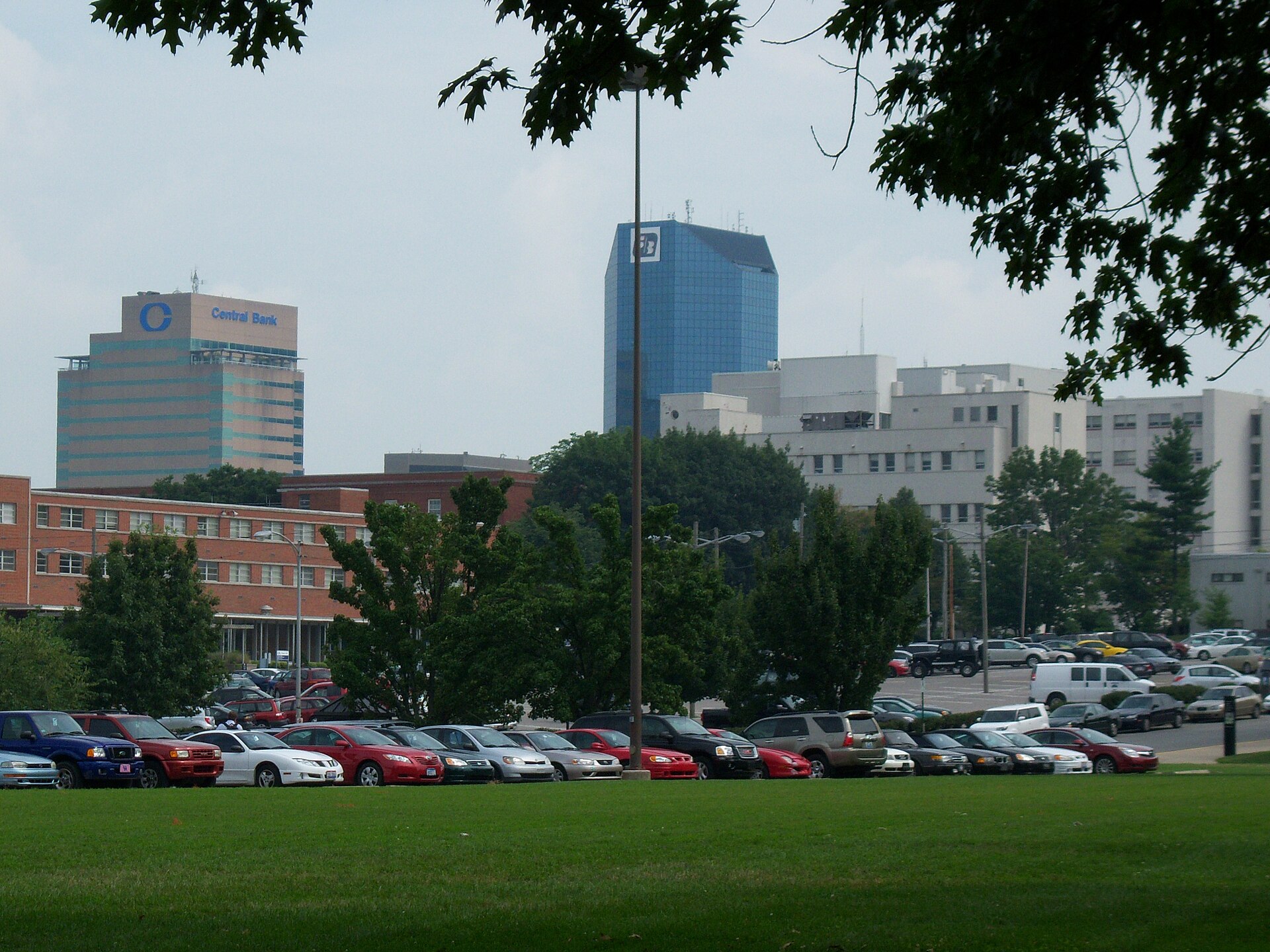
In 1974, Lexington and Fayette County merged into the Lexington-Fayette Urban County Government, consolidating city and county functions under one council and mayor — a structural change still cited as a model for other mid-size American cities. Rupp Arena and the Lexington Center opened downtown in 1976, and decades later downtown redevelopment brought CentrePointe, the Central Bank Center renovation, and a growing bourbon-tourism and horse-tourism economy anchored by Keeneland, the Kentucky Horse Park, and the Bourbon Trail. The through-line since 1775 hasn't changed much: horses, hemp turned to other crops, education, and a downtown built around a courthouse square.
- Merged government, 1974
- Rupp Arena opens, 1976
- Bourbon and horse tourism boom
Gone
Landmarks that changed forever
Places that really existed in Lexington and have since been transformed, removed, or reinterpreted — plus what remains on the ground today.
Cheapside Slave Market
1800s–1865
The public square beside the Fayette County Courthouse operated as one of the largest slave auction markets in the Upper South, alongside its use as a farmers' market and civic gathering space. After decades of debate, the city removed Confederate monuments from the square in 2017 and renamed the adjoining park Henry A. Tandy Centennial Park in 2020, honoring a formerly enslaved Lexington builder. The courthouse itself now houses a visitor center that interprets this history directly.
Kentucky Association racetrack
1826–1933
Downtown Lexington's original thoroughbred track ran on Fifth Street for over a century, predating Keeneland by decades and hosting some of the sport's earliest stakes races. It closed during the Depression, and Keeneland's founders explicitly built their new track in 1936 to carry on its racing stock and traditions. The site is now a residential neighborhood; street names like Race Street preserve the memory.
The Lafayette Hotel
1920–1970s
A grand downtown hotel that hosted decades of Lexington social and political life before falling into decline and eventual demolition, part of a broader wave of mid-century downtown clearance. Its site and others like it are why Lexington's preservation community has been especially vocal about protecting what remains of the city's 19th- and early 20th-century core.
Still here
Still standing
Lexington has kept an unusual amount of its 19th-century fabric alive. These are historic places you can put on a walking or driving route today.
Ashland, the Henry Clay Estate
Built 1811
The restored home and grounds of statesman Henry Clay sit on Richmond Road just east of downtown, surrounded by the same rolling estate land Clay farmed. Rebuilt by his family in the 1850s on the original foundations, it operates today as a museum with guided tours. Open to the public year-round.
Mary Todd Lincoln House
Built Early 1800s
The West Main Street home where Mary Todd, the future First Lady, spent her girlhood is the first house museum in America dedicated to a First Lady. It survived a period as a boardinghouse before restoration in the 1970s. Open for public tours.
Transylvania University's Old Morrison
Built 1833
The Greek Revival centerpiece of Transylvania University's campus, designed by Gideon Shryock, still anchors the country's oldest college west of the Alleghenies. It has survived fire and rebuilding and remains an active academic building today.
Rupp Arena
Built 1976
Home to University of Kentucky basketball since it opened downtown as part of the Lexington Center complex, Rupp Arena is named for legendary coach Adolph Rupp and remains one of the loudest arenas in college basketball. Renovated in recent years as part of the Central Bank Center project, it's open for games and touring concerts.
Keeneland Race Course
Built 1936
Built by local horsemen as a nonprofit successor to the old Kentucky Association track, Keeneland's limestone grandstand and paddock have changed little since opening. It runs boutique spring and fall race meets and hosts the world's largest thoroughbred auction house on the same grounds. Open to visitors for training-hours viewing most mornings.
The Kentucky Horse Park
Built 1978
A working horse farm and museum campus north of the city that tells the history of the horse-human relationship, hosts equestrian competitions, and offers trail rides and farm tours. Publicly accessible year-round.
Watch
Two documentaries about Lexington
Long-form film on the city — one on Lexington's growth, one on the Bluegrass region Lexington sits at the center of.
History love
Lexington, Kentucky History | From Frontier Station to Horse Capital
A full-length history of Lexington tracing the city from its 1775 founding through the hemp and thoroughbred economies to its modern identity as the horse capital of the world.
Kentucky Historical Society
"A Bluegrass Century" — local historians on Fayette County
Kentucky historians walk through a century of Fayette County history, from the rancho-era land grants of the frontier to the postwar growth of the merged city-county government.
Archival
What Lexington looked like a long time ago
Archival footage of downtown and the surrounding horse farms from decades past.
Kentucky Archives
Mid-century Lexington — downtown and the horse farms on film
Archival footage from Lexington's downtown and surrounding horse farms, capturing the Bluegrass landscape before the urban service boundary locked in the farm-city divide that still defines the region.
Short clips
Four pieces of Lexington history
A landmark, a reinterpreted public square, a famous racetrack, and the planning decision that saved the horse farms.
Wildcat History
Rupp Arena — the building basketball built
A short account of Rupp Arena's 1976 opening and its place in University of Kentucky basketball history.
Lexington History Guy
Cheapside then and now
A local walk-through comparing Cheapside's history as a slave market with its present-day role as Henry A. Tandy Centennial Park.
Bluegrass Heritage
Keeneland — the track horsemen built for themselves
A retrospective on Keeneland's founding in 1936 as a nonprofit alternative to the old Kentucky Association track.
Kentucky in a Minute
How the urban service boundary saved the horse farms
A short explainer on Lexington's 1958 urban service boundary and why it kept Bluegrass horse farms from being paved over.
Who
Notable people from Lexington
Four people whose connection to the city is real and specific — from a Founding-era statesman to a hall-of-fame basketball coach.
Henry Clay
Statesman, 'The Great Compromiser'
The U.S. Senator, Speaker of the House, and three-time presidential candidate made Lexington his home base for most of his career, building the Ashland estate on the city's edge. His compromises over slavery expansion helped delay the Civil War by decades.
Mary Todd Lincoln
First Lady of the United States
Born and raised in Lexington, Mary Todd left for Springfield, Illinois, where she met and married Abraham Lincoln. Her Lexington girlhood home is now a museum on West Main Street.
Adolph Rupp
University of Kentucky basketball coach, 1930–1972
Rupp built the Wildcats into a national basketball power over four decades, winning four NCAA championships and turning Lexington into one of the sport's most passionate fan bases. Rupp Arena carries his name today.
Henry A. Tandy
Builder and civic leader
Born enslaved, Tandy became one of Lexington's most prominent Black building contractors after emancipation, constructing landmarks throughout the city. Cheapside's central park was renamed for him in 2020.
Go see it
Walk it yourself
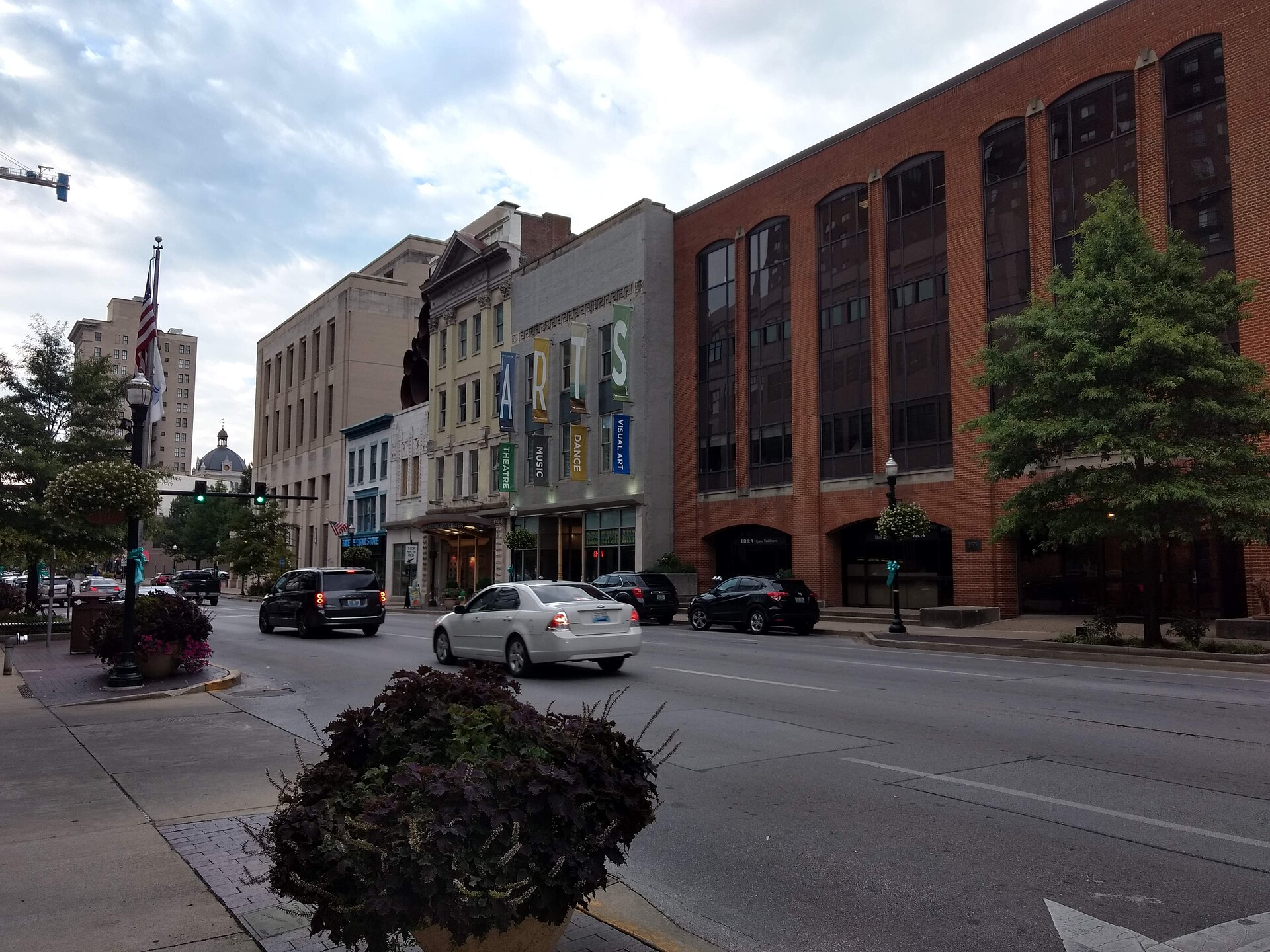
Most of what's left is walkable or a short drive: Cheapside and the courthouse square, the Mary Todd Lincoln House, Transylvania University, then Ashland on the way out.
A note on sources: local histories disagree, especially on early founding dates, exact acreage and who deserves credit for what. Where accounts conflict we've used the widely accepted version and said so carefully. For primary material, the Lexington Public Library's local history collections, the Kentucky Historical Society, the University of Kentucky's Special Collections Research Center, and the Bluegrass Trust for Historic Preservation all hold documents, photographs and oral histories that go far deeper than any web page. Corrections are welcome — see our disclaimer and sources page or contact us.